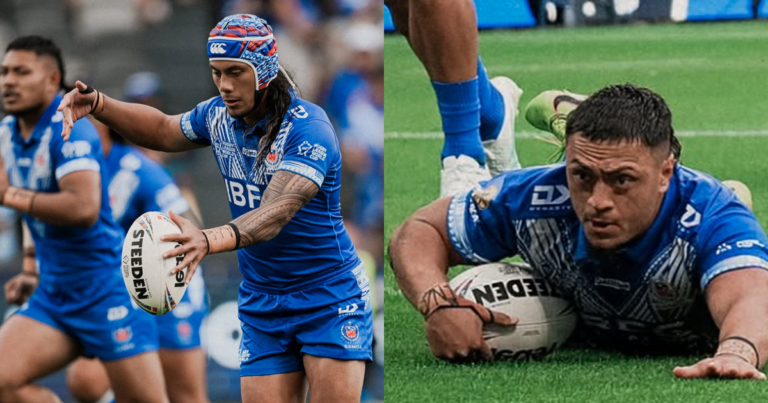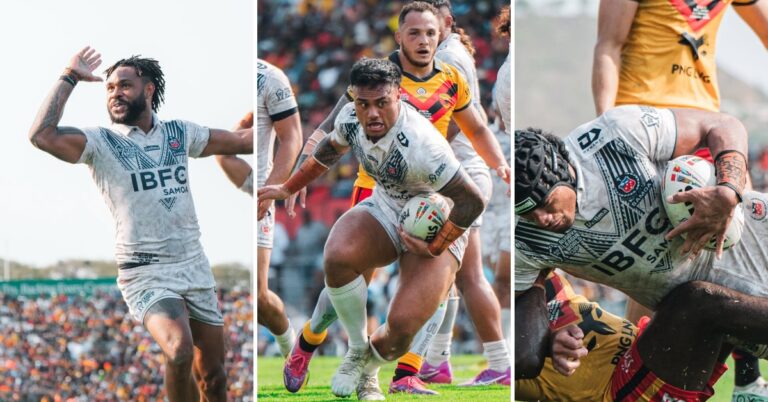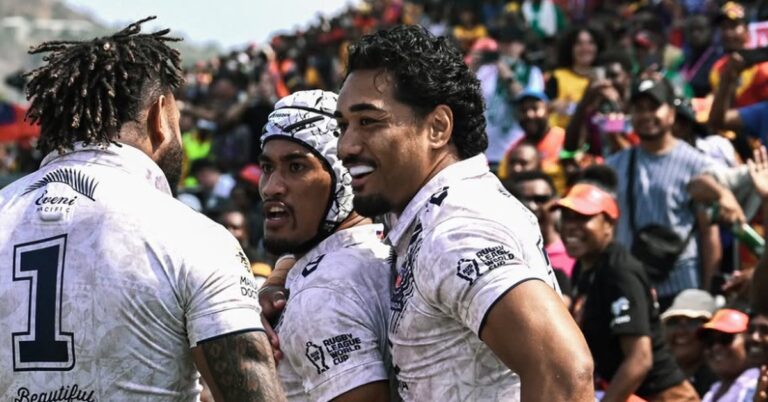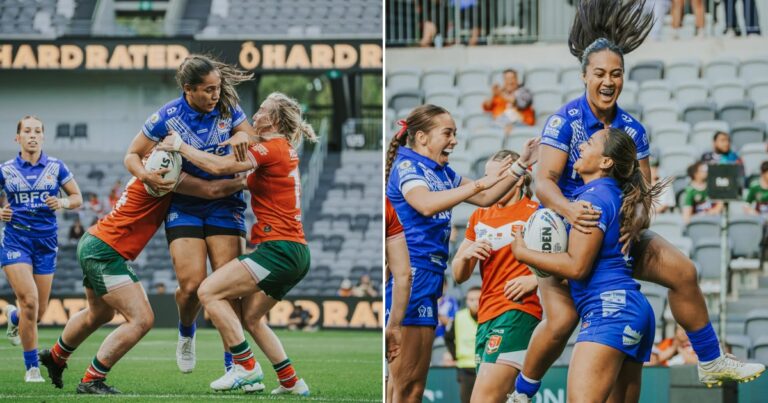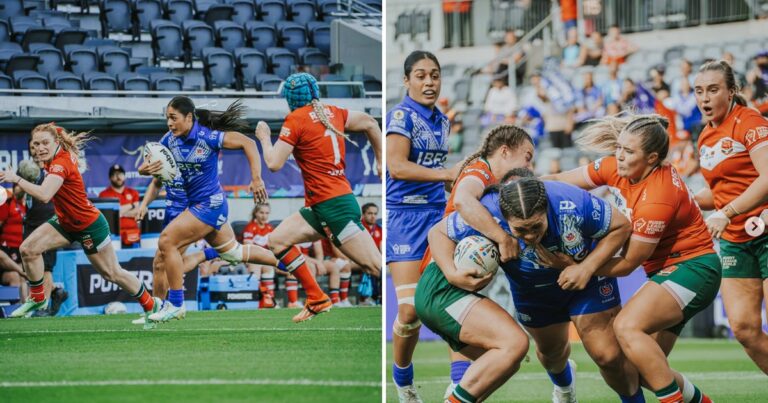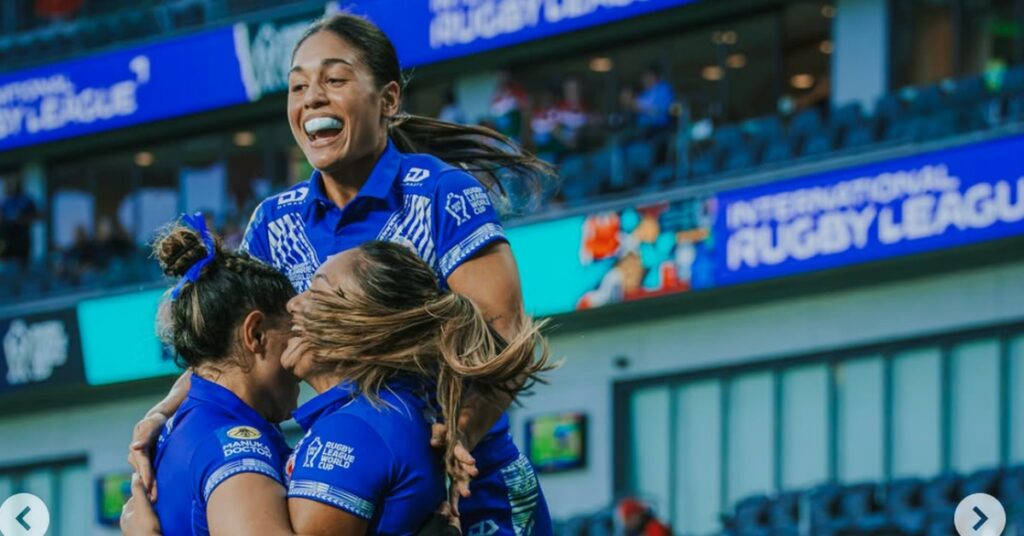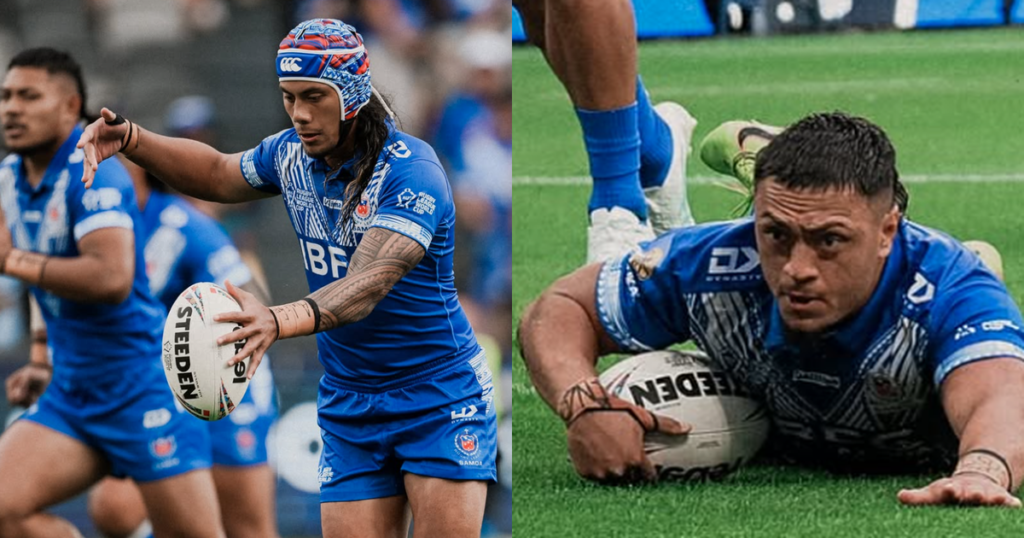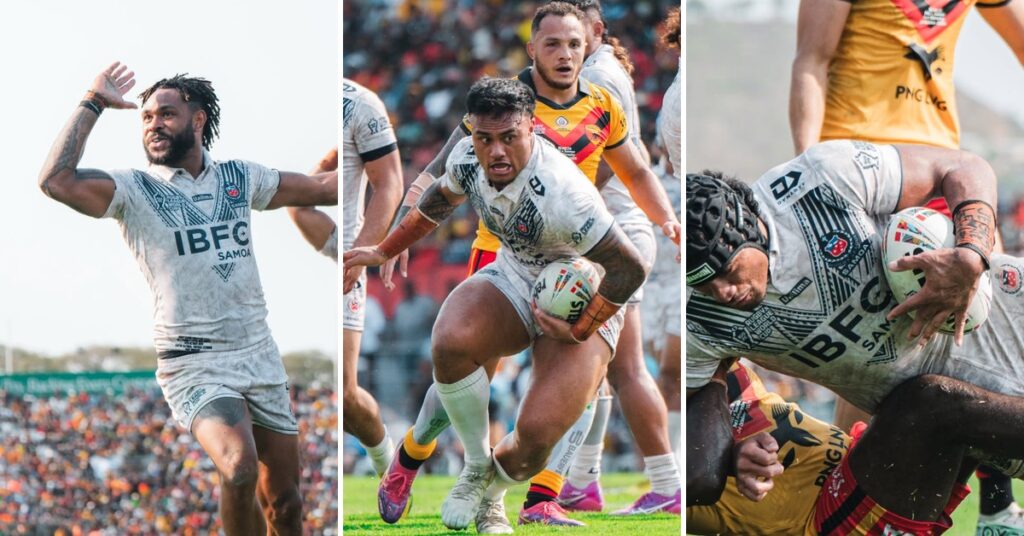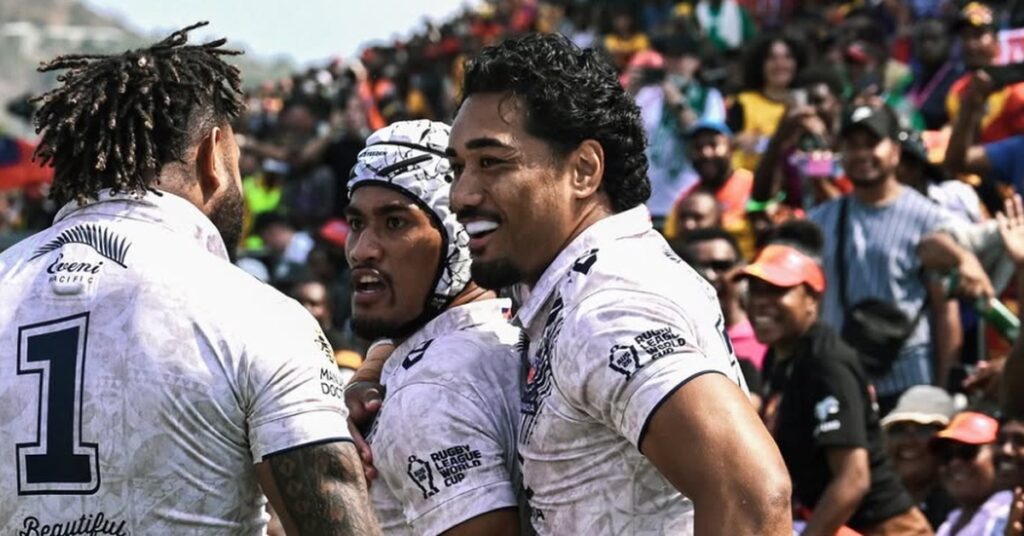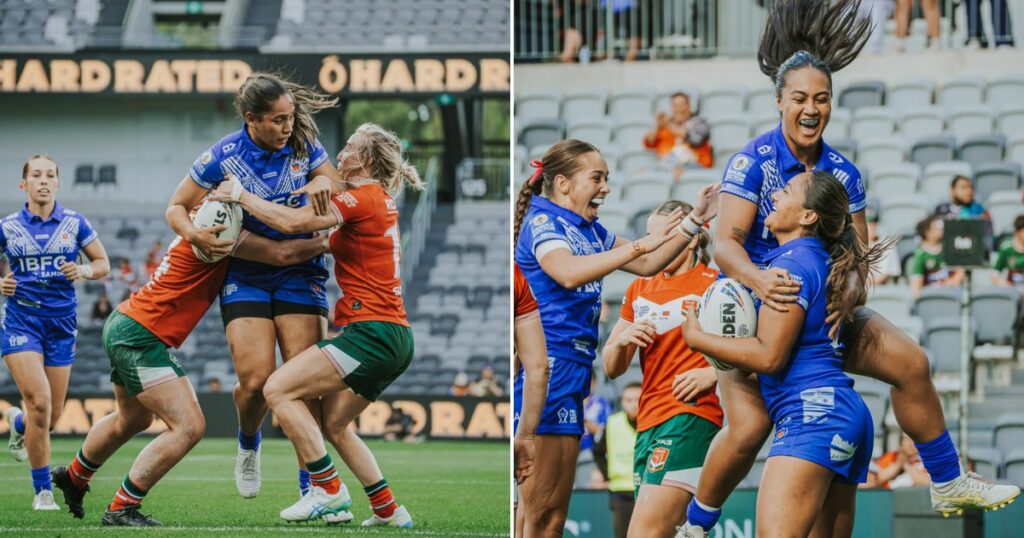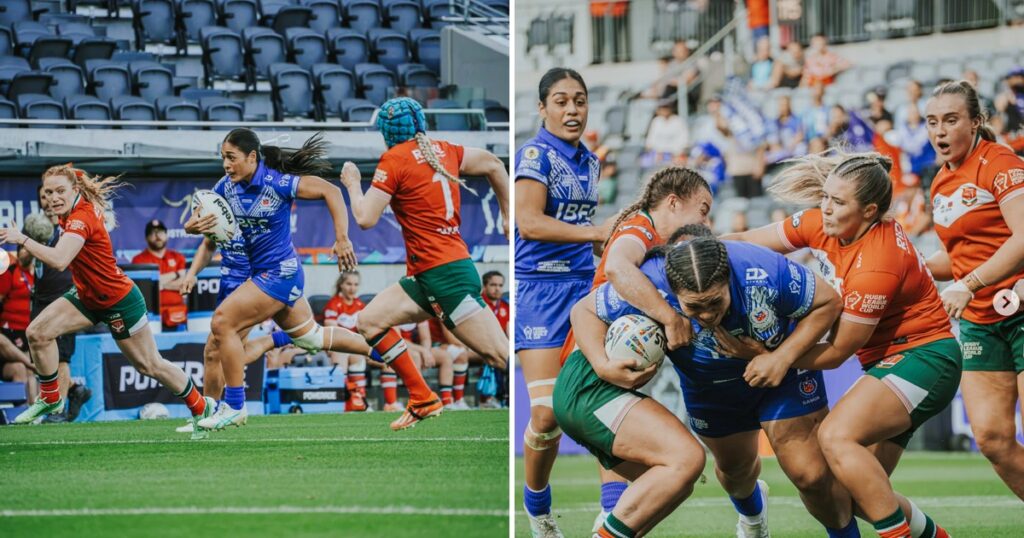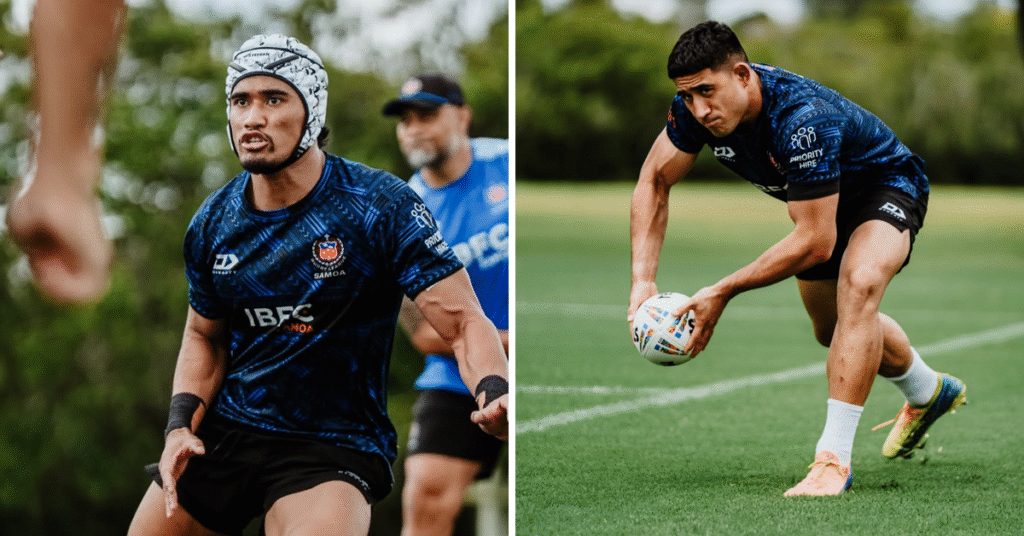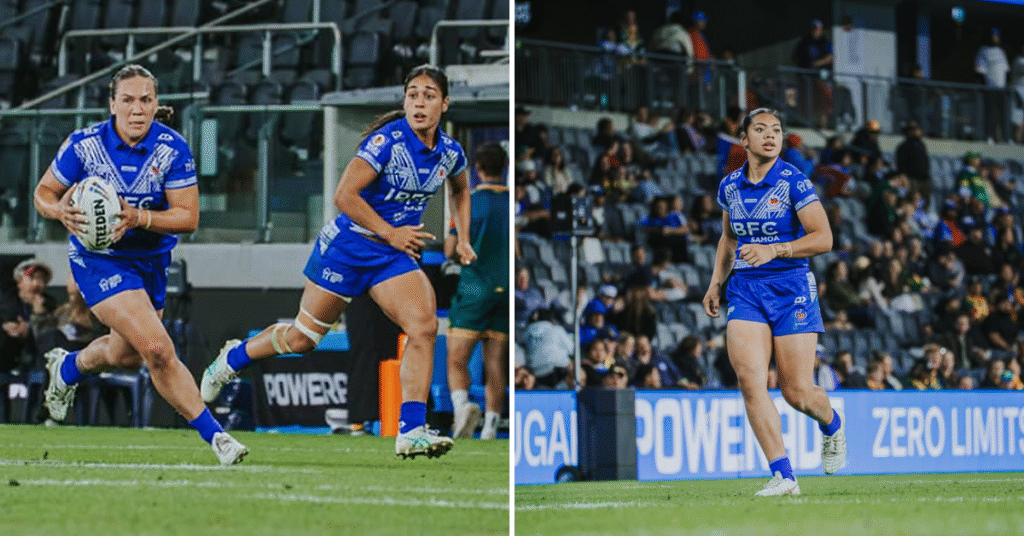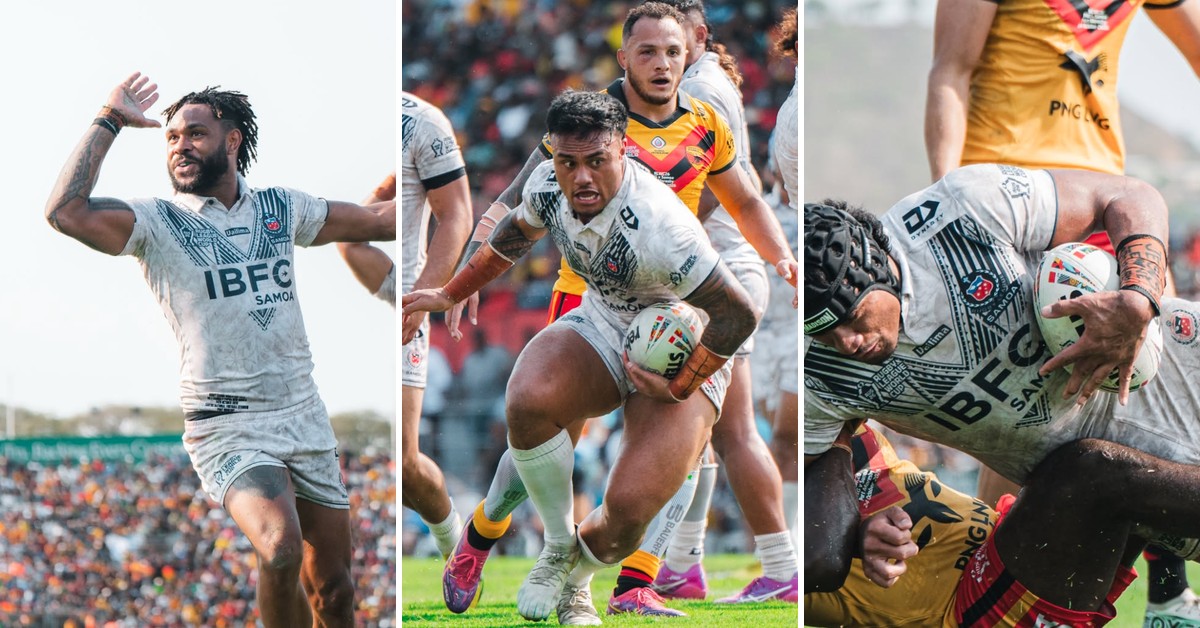
The challenge was always going to be about more than the scoreboard. For Toa Samoa, taking on Papua New Guinea on home soil meant facing a nation whose passion for rugby league runs deep, inside a stadium packed with supporters determined to lift the Kumuls to an upset. For 30 minutes, the hosts gave their fans reason to believe it was possible. But once Samoa found its rhythm, the contest changed dramatically.
Toa Samoa delivered a commanding 64-6 victory over Papua New Guinea at Santos National Football Stadium on Saturday, October 24, scoring 13 tries to one to record their second consecutive win at the 2026 Rugby League World Cup. After opening their campaign with a 78-4 demolition of France, Samoa backed up that performance with another emphatic result, reinforcing their position as one of the tournament’s leading contenders. The final score told the story of Samoa’s dominance. The opening half, however, told a more revealing one.
Sualauvi Fa’alogo gave Samoa an immediate lift, crossing in the opening minute after Francis Manuleleua collected the short kick-off and surged downfield. It was an early reminder of the speed and attacking threat Samoa possessed, but Papua New Guinea responded with the intensity expected from a side playing in front of its home crowd. Bailey Biondi-Odo crossed for the Kumuls in the 18th minute, with Rhyse Martin adding the conversion to put the hosts ahead 6-4. For a moment, the atmosphere inside the stadium reflected the possibility of a genuine contest. PNG had weathered Samoa’s opening surge and found a way onto the scoreboard, forcing the visitors to respond. Samoa needed a spark, and Spencer Leniu provided it. Introduced from the interchange, the powerful prop brought an immediate change in energy. His carries were forceful, his footwork challenged the defensive line, and his ability to generate momentum through contact gave Samoa the platform it needed to take control.
In the 30th minute, Leniu crashed over from a Jarome Luai pass to reclaim the lead for Samoa. The try shifted the pressure back onto the hosts, and although Leniu was denied a second effort shortly afterwards when the bunker ruled he had grounded the ball short of the line, his influence was already evident. Samoa struck again before halftime. Brian To’o produced a tremendous effort to keep a cross-field kick alive, tapping the ball back infield for Stephen Crichton to gather and finish. The conversion was successful, giving Samoa a 14-6 advantage at the break. The margin was eight points, but the momentum was beginning to move decisively in the visitors’ favour. What followed after halftime was a demonstration of Samoa’s ability to turn pressure into points. The visitors returned with greater precision, stronger attacking combinations and a relentless willingness to test the Kumuls’ defensive line.
Fa’alogo scored his second try in the 44th minute before Manuleleua crossed three minutes later. Hamiso Tabuai-Fidow added another in the 52nd minute, and To’o finished a break of his own in the 58th as Samoa extended the lead to 32-6. Three tries in the opening 14 minutes of the second half transformed the contest. Papua New Guinea were suddenly chasing a game that had begun with genuine promise, while Samoa were playing with the confidence of a side that had found its attacking rhythm. The scoring continued as Shawn Blore crossed in the 65th minute, followed by Ronald Volkman a minute later. Tabuai-Fidow secured his second in the 68th minute, Izack Tago added another in the 70th, and Blore completed his double in the 77th. Ata Mariota capped the performance with a try in the closing minute to bring Samoa’s total to 64 points.
The hosts were unable to find a response to Samoa’s second-half surge, with Robert Derby also sent to the sin bin in the 63rd minute. By fulltime, the difference between the sides was unmistakable. Samoa had scored 50 unanswered points after halftime. At the centre of Samoa’s performance was Manuleleua, who once again demonstrated why he has become one of the standout players of the tournament. The lock forward was named Player of the Match against Papua New Guinea, earning the honour for the second consecutive game after receiving the same recognition in Samoa’s opening victory over France. Back-to-back Player of the Match awards are a fitting reflection of the impact he has made across the opening two rounds. Against the Kumuls, Manuleleua delivered a performance that extended well beyond his try in the 47th minute. He carried for 260 metres, recorded 106 metres after contact, broke the line eight times and completed 21 of his 22 attempted tackles. Those numbers captured the complete nature of his contribution, combining attacking power with the defensive work required to compete at the highest level.
For a player operating in the middle of the field, where collisions are constant and space is limited, that combination is significant. Manuleleua gave Samoa a reliable presence through the middle, helping the side establish field position and maintain pressure as the match progressed. His consecutive awards also underline the consistency he has brought to a Samoa side with ambitions of going further than its runner-up finish at the previous men’s World Cup. Leniu was equally influential in changing the course of the match. His 38-minute stint produced 166 running metres and 10 tackle breaks, alongside his crucial try that put Samoa back in front. His ability to bend the defensive line created opportunities for the players around him, and his impact was felt long after his introduction. Fa’alogo’s double further demonstrated the threat Samoa possess across the backline. The fullback’s speed and finishing ability gave the visitors an early breakthrough and helped them capitalise when the Kumuls began to tire. Tabuai-Fidow also crossed twice, while To’o’s work rate and Crichton’s composure added further dimensions to Samoa’s attack.
Blore’s double off the interchange highlighted the depth available to head coach Ben Gardiner, while Volkman, Tago and Mariota ensured the scoring continued deep into the final quarter. Luai’s direction and the contributions of Samoa’s forward pack helped create the conditions for those finishing efforts, turning sustained pressure into a relentless series of attacking opportunities. Samoa’s 13 tries were shared across the squad, with Fa’alogo, Tabuai-Fidow and Blore scoring twice each. Leniu, Crichton, Manuleleua, To’o, Volkman, Tago and Mariota each added one. It was a collective performance in which individual brilliance was supported by the work of the entire team. Two rounds into the tournament, Samoa have scored 142 points while conceding just 10 across victories over France and Papua New Guinea. Those figures reflect an attack capable of overwhelming opponents, but the next challenge will demand more than another high-scoring performance.
Tonga await.
The rivalry between Toa Samoa and Tonga carries a significance that extends well beyond the rugby league field. Both nations draw strength from their people, their families and the cultural pride represented by their jerseys. When they meet, the contest brings together two Pacific rugby league powers whose supporters understand exactly what the occasion means. Both sides enter the third round unbeaten, with the showdown set to have major implications for the race to the semifinals. Samoa will take confidence from their opening two performances, but Tonga present a different test, one that will demand discipline, composure and the ability to match intensity across the full 80 minutes.
The victory in Port Moresby was another statement of Samoa’s intent. Now comes the matchup that the Pacific rugby league world has been waiting for. All eyes turn to Tonga for Week 3, as Toa Samoa prepare to face Tonga at CommBank Stadium in Parramatta on November 1.