November 1, 2026 | Rugby League World Cup 2026
There are occasions in sport when the significance of a match extends far beyond the result. When the final whistle sounds, the scoreboard tells one story, but the moments surrounding it tell another. For Toa Samoa, November 1, 2026, was one of those nights.
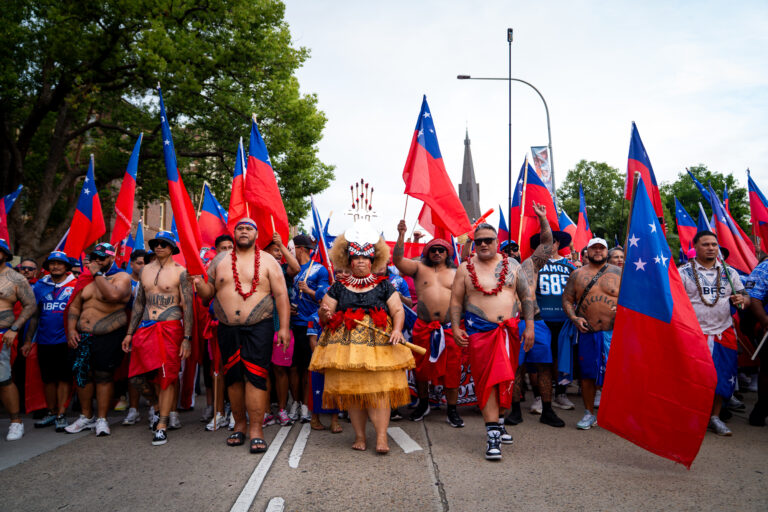
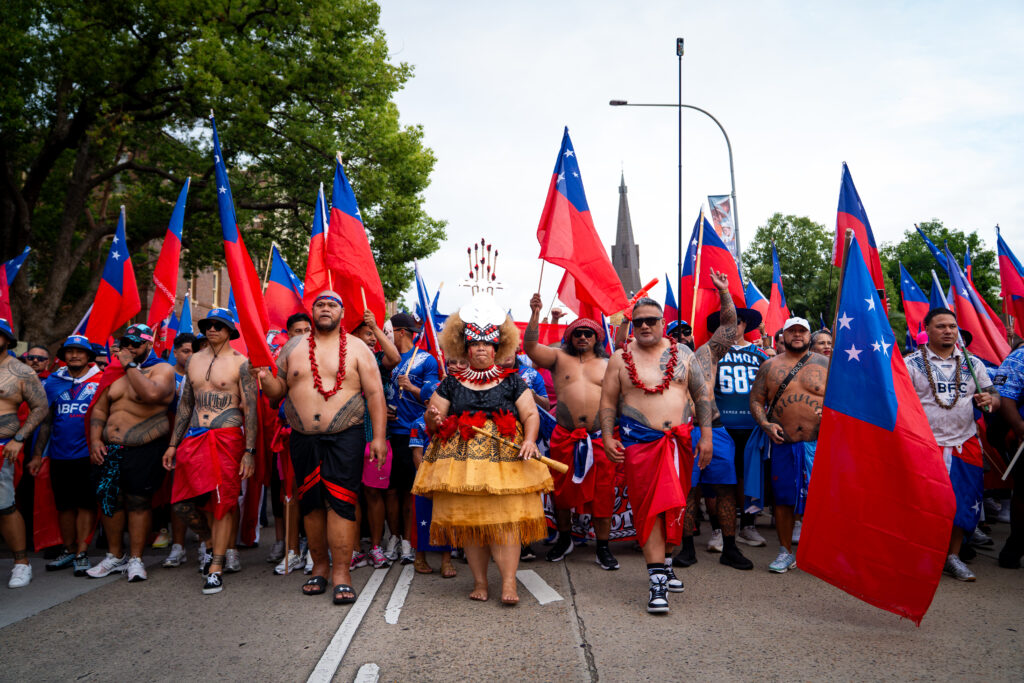
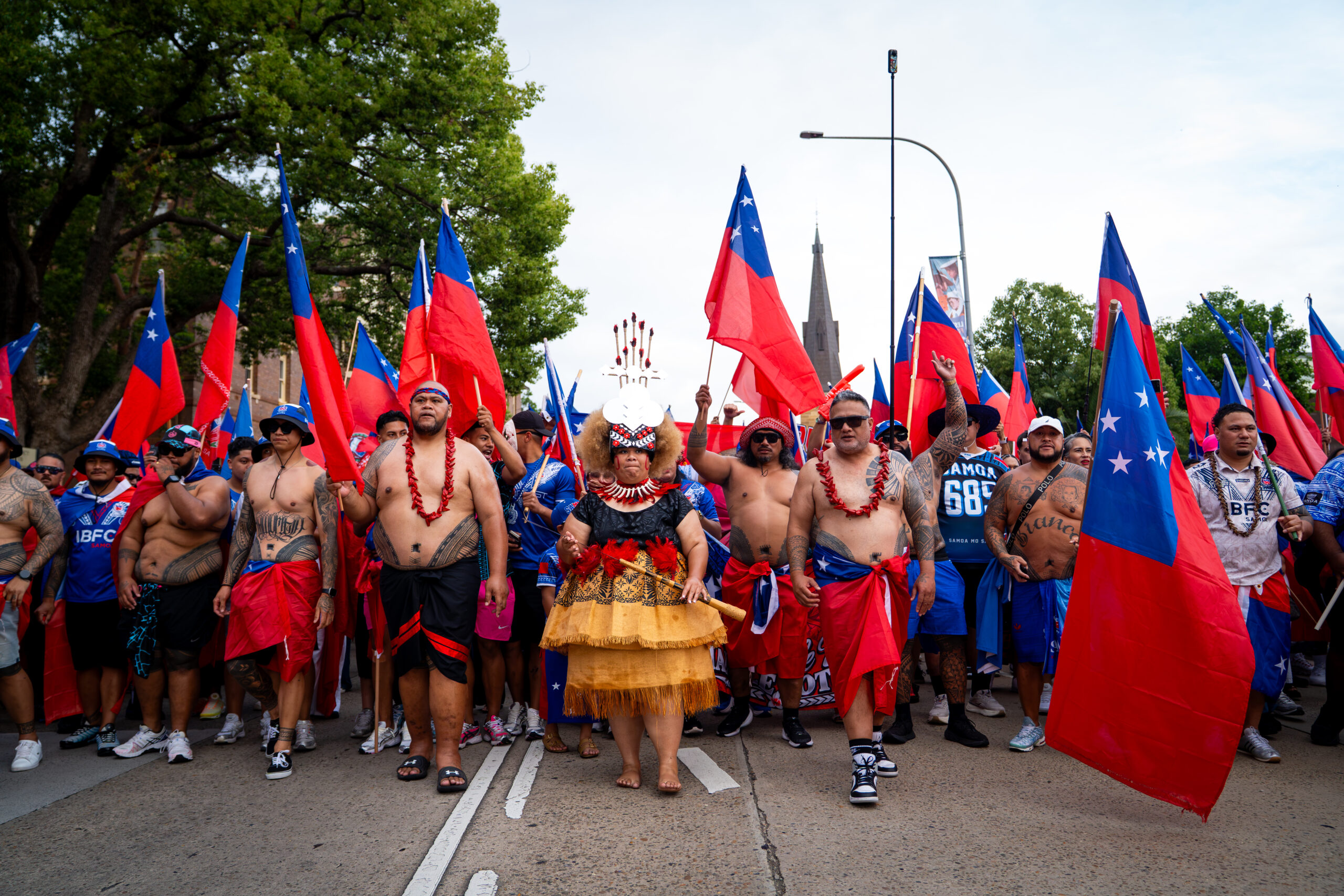
A sold-out CommBank Stadium. Thousands of Samoan supporters dressed in blue. Flags raised across the stands, voices united in song and a nation represented on one of the biggest stages in international rugby league. When Toa Samoa faced Tonga in their Rugby League World Cup clash at CommBank Stadium in Parramatta, the occasion carried a significance that extended well beyond the competition. For the Samoan supporters who filled the stadium, it was an opportunity to stand behind their team, celebrate their identity and show the world what it means to support Toa Samoa. A record 29,411 spectators packed into CommBank Stadium, setting a new attendance record for the venue. The fixture had sold out, with anticipation building in the days leading up to the highly anticipated encounter. From families travelling across Australia to supporters arriving from overseas, the blue presence was impossible to miss.
The Blue Army had arrived.
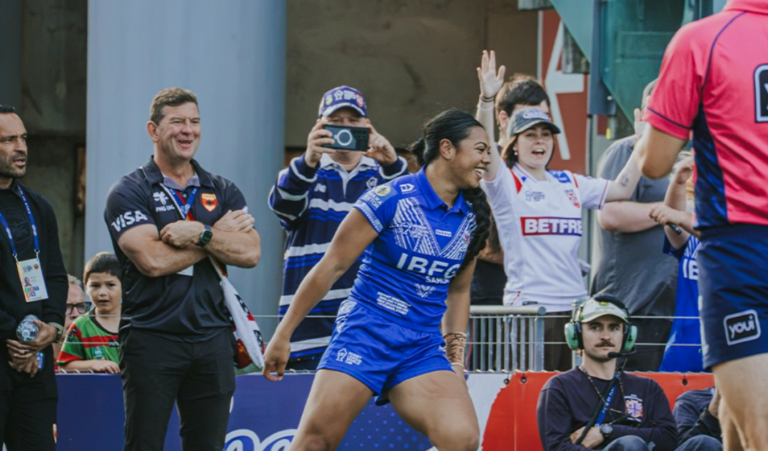
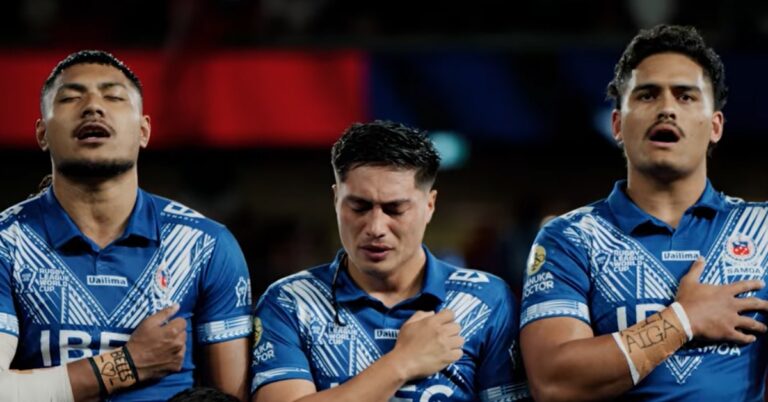
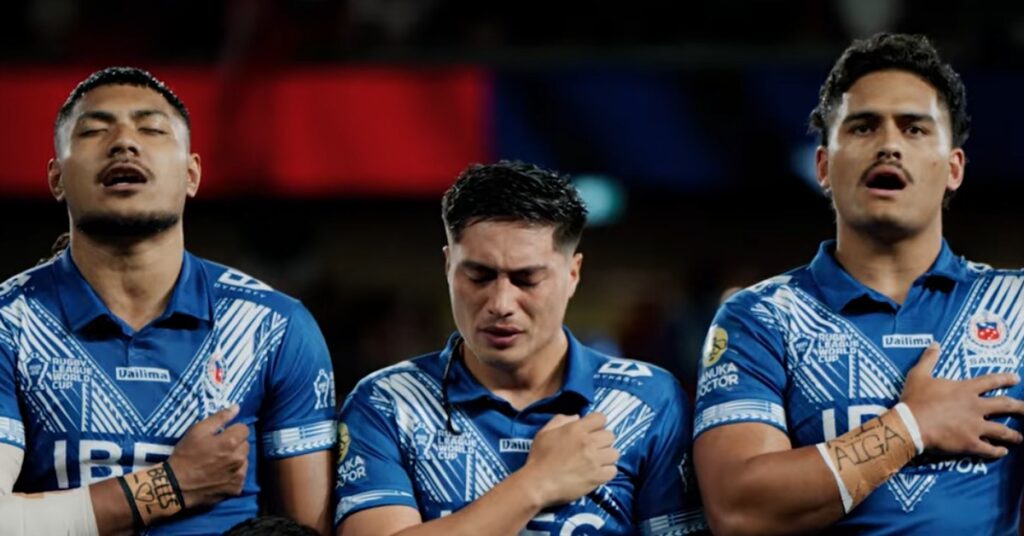
Throughout the stadium, Samoan flags waved proudly as supporters gathered in their jerseys, traditional attire and national colours. The atmosphere carried the unmistakable sound of Samoa, with songs, chants and cheers echoing from the stands. Every time Toa Samoa made an attacking break, the blue sections erupted. Every defensive effort was met with encouragement. Every opportunity brought supporters to their feet. But before the first whistle, there was a moment that captured the spirit of the occasion in a way the scoreboard never could. As Samoan artist Tree took to the field to perform the national anthem, the Samoan crowd began singing alongside her. What started as an anthem performance quickly became a moment shared by thousands. Voices rose throughout the stadium, with supporters taking over the song and filling CommBank Stadium with the sound of their nation. It was loud. It was powerful. It was the kind of moment that sent chills down your spine and gave you goosebumps.
For those inside the stadium, it was difficult not to feel the emotion of it all. Thousands of Samoans, standing together, singing the words of their national anthem with pride. It was a reminder that the people represented by the jersey extend far beyond the players on the field.
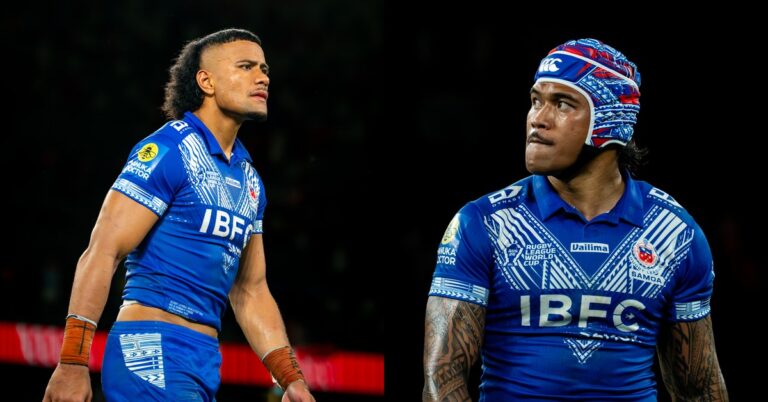
The occasion continued with Toa Samoa performing the Siva Tau, a powerful display of cultural identity and unity before kickoff. Across the field, Tonga answered with the Sipi Tau, setting the stage for a contest between two Pacific nations whose rugby league rivalry has become one of the most anticipated fixtures in the international game.
When the match began, the energy inside the stadium carried onto the field.
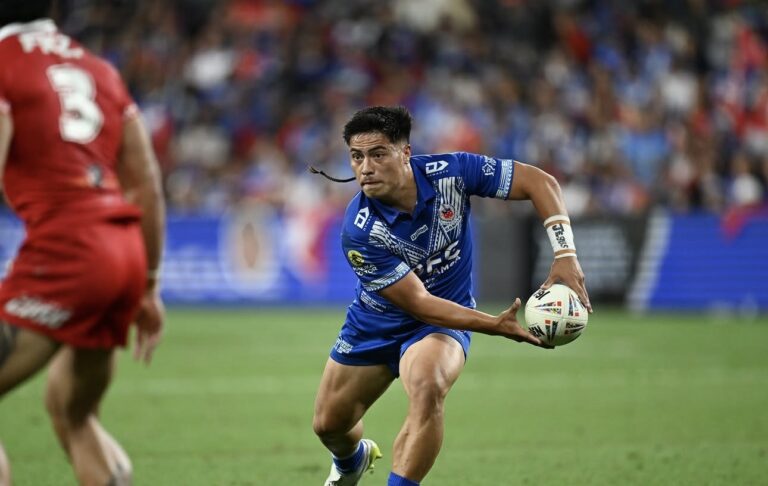
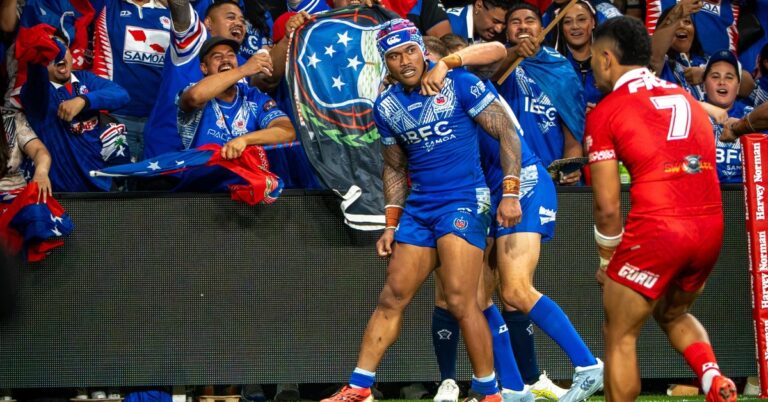
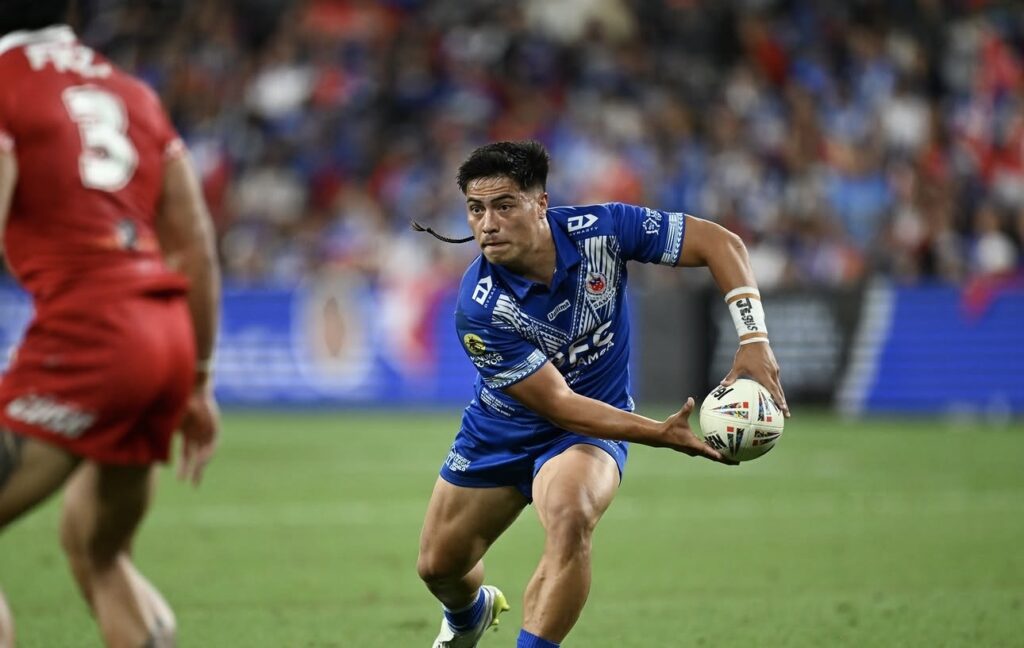
The opening exchanges were fiercely contested, with Tonga striking first through Robert Toia before extending its advantage through an Isaiya Katoa penalty. Toa Samoa responded before halftime, with Brian To’o crossing after a moment of individual brilliance from Stephen Crichton to bring the score to 8–4.
Tonga extended its lead early in the second half through Jojo Fifita, but Toa Samoa continued to fight.
To’o crossed for his second try in the 52nd minute, bringing renewed energy to the Samoan side and the supporters who had continued to lift the team from the stands. With 17 minutes remaining, Hamiso Tabuai-Fidow finished a sweeping attacking movement to bring Toa Samoa within two points.
The momentum was shifting.
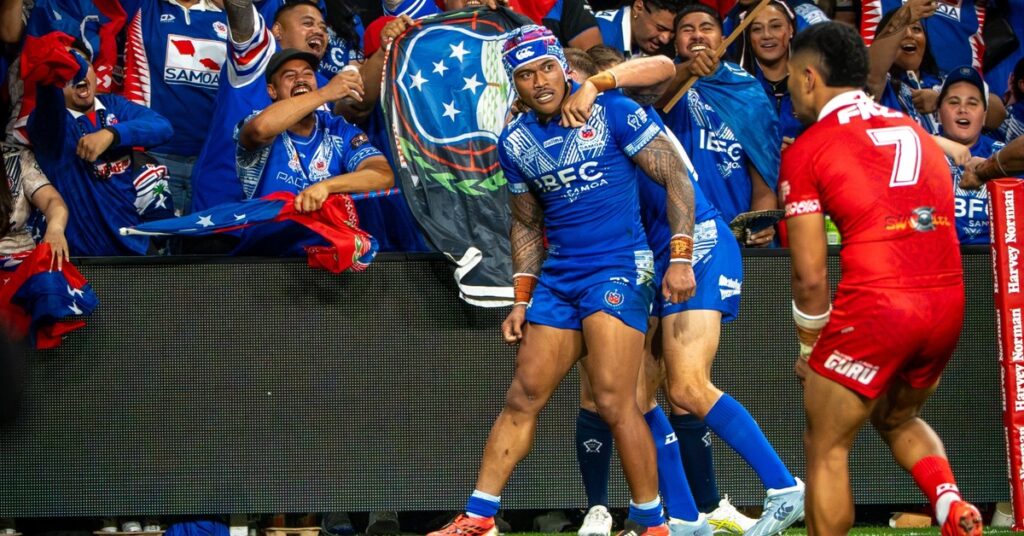
Ronald Volkman then crossed to give Samoa an 18–14 lead, sending the blue supporters into celebration. For a moment, the stadium erupted as belief spread throughout the stands. The Samoan faithful could sense what was possible.
But Tonga responded through captain Addin Fonua-Blake, who crossed before Katoa converted to restore Tonga’s lead at 20–18.
The closing minutes brought everything expected of a World Cup encounter between two determined sides. Toa Samoa continued searching for a winning score, coming agonisingly close through Sualauvi Fa’alogo, whose effort was ruled out after his foot brushed the sideline. Another attacking opportunity followed in the final minute, but Tonga held firm to secure the victory.
The final score was 20–18.
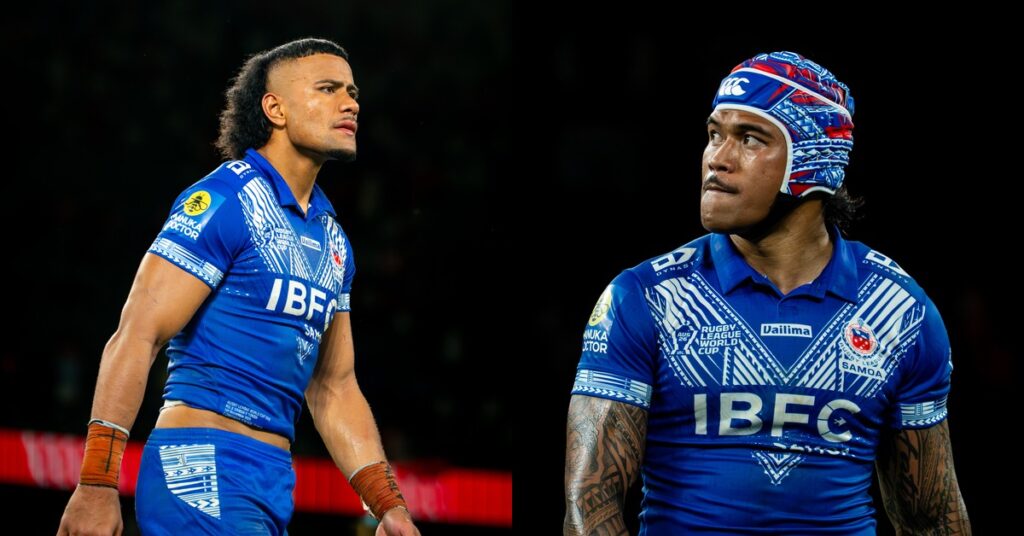
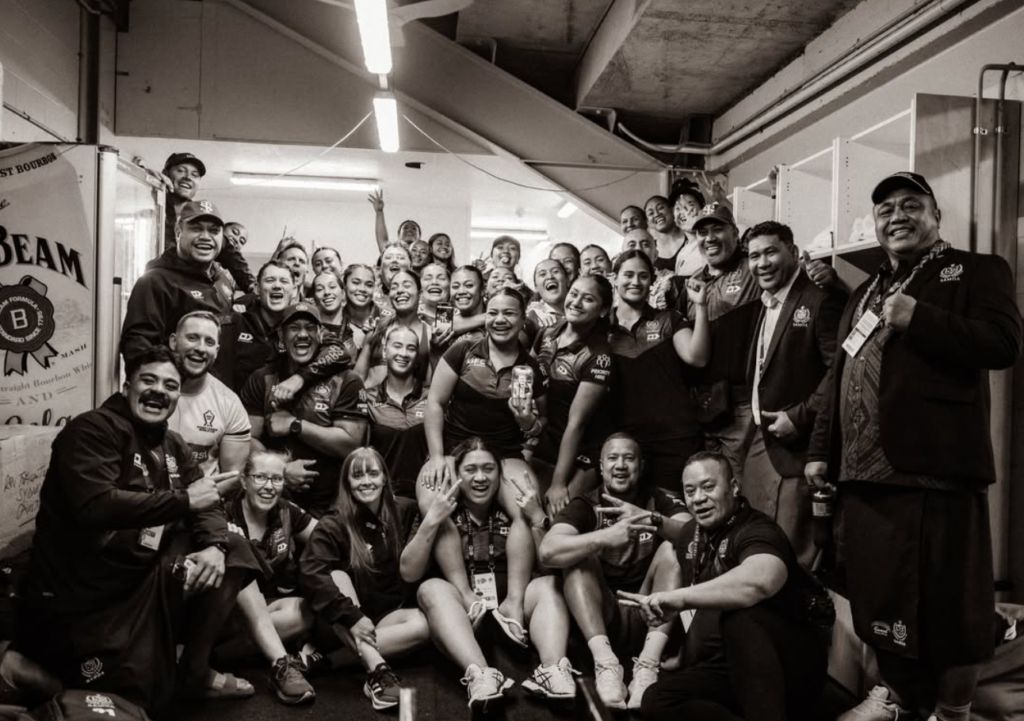
For Toa Samoa, it was a difficult result after a determined performance that saw the team fight its way back into the contest and take the lead in the closing stages. The players left everything on the field, representing their nation in a match that demanded physicality, composure and commitment until the final whistle.
Yet, beyond the result, the support inside CommBank Stadium told its own story.
The Blue Army did not stop singing. They did not stop waving their flags. They continued to stand behind their team through every momentum shift, every setback and every opportunity.
That support is part of what makes Toa Samoa special.
Across generations and geographical borders, the Samoan people have maintained a deep connection to their national team. Whether in Samoa, Australia, New Zealand, the United States or elsewhere around the world, supporters continue to find ways to come together when Toa Samoa takes the field.
For many, supporting the team is an expression of identity. It is about seeing their culture represented, hearing their language spoken and watching players with connections to their villages and families compete at the highest level.
It is about the children wearing their first Toa Samoa jersey, the parents teaching them the songs and the grandparents watching with pride as the next generation carries the blue.
The reach of the occasion extended well beyond those fortunate enough to secure a seat inside the stadium. The match attracted an average Australian television audience of approximately 1.502 million viewers on Channel Seven, with a national broadcast reach of 2.93 million. It became the highest-rated non-Kangaroos international rugby league Test in the sport’s history. Those figures reflected the enormous interest surrounding the two Pacific nations and the growing place of Samoa and Tonga in international rugby league. For those watching from home, the match offered a glimpse of the atmosphere, the rivalry and the pride that filled CommBank Stadium. But for the 29,411 people inside the venue, it was something else entirely.
It was one of those events where you simply had to be there.
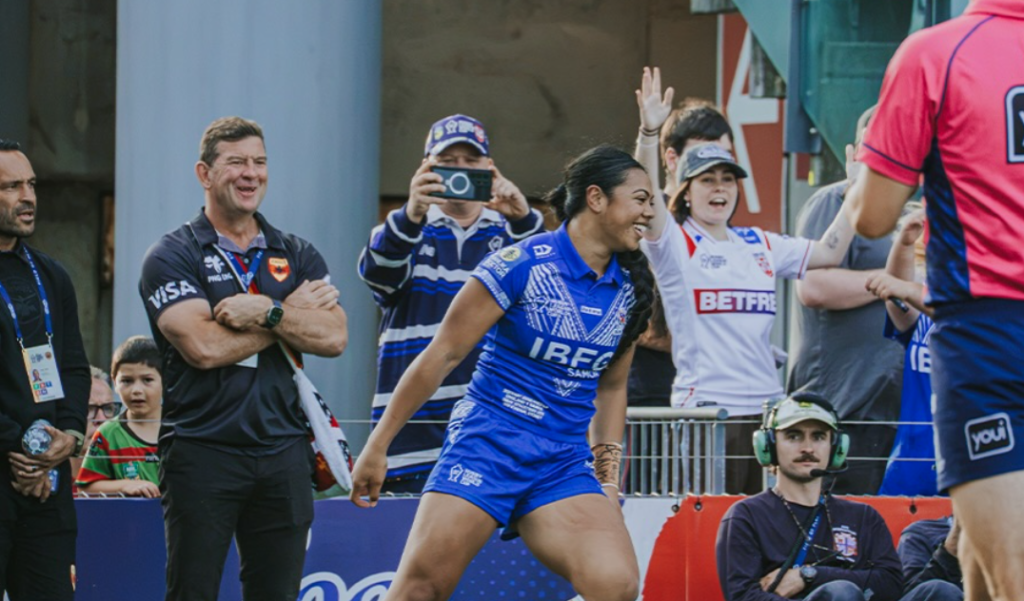
You had to hear the Samoan supporters singing the national anthem with Tree. You had to feel the stadium shake when Toa Samoa found the back of the line. You had to see the flags waving, the families standing together and the emotion carried by supporters who had travelled to be part of the occasion. A television broadcast could capture the tries, the tackles and the celebrations, but it could never fully recreate what it felt like to stand among thousands of Samoans singing for their country. On November 1, that connection was on full display.
The 29,411 supporters who filled CommBank Stadium created an atmosphere that will remain part of the story of this World Cup. The attendance reflected the enormous interest surrounding the fixture, but the voices, colours and unwavering support of the Samoan faithful gave the occasion its unmistakable character.
Toa Samoa may not have walked away with the result, but the team was never short of support.
And as the players left the field, one thing remained clear: the connection between Toa Samoa and its people is something that cannot be measured by a scoreboard.
November 1, 2026, will be one for the history books.
It will be remembered as the night 29,411 people filled CommBank Stadium for one of the biggest Pacific rugby league occasions, but for the Samoan people, it will also be remembered as the night the Blue Army showed up in numbers, lifted their voices and stood proudly behind their team. It will be remembered for Tree’s rendition of the Samoan national anthem and the moment thousands of voices joined hers, transforming an anthem performance into a powerful expression of national pride. It will be remembered for the flags that filled the stands, the songs that echoed throughout Parramatta, the families who travelled to be there and the supporters who made their presence felt from the opening whistle to the final seconds. It will be remembered for a team that fought, a nation that believed and a community that continues to stand together wherever Toa Samoa plays. For the players, it was an opportunity to represent the flag and the people behind it. For the supporters, it was an opportunity to remind the world that wherever Toa Samoa goes, its people will follow.
The result may be recorded in the history books, but so too will the people who made the occasion what it was. Because sometimes, the most powerful moments in sport cannot be measured in points, victories or defeats. Sometimes, they are found in the voices of a nation singing together, the sight of thousands standing proudly behind their team and the feeling of knowing you are part of something bigger than yourself. For the jersey. For the flag. For the people. Toa Samoa.